
Simple Tips to Rotate Your Walk-In Closet Every Season
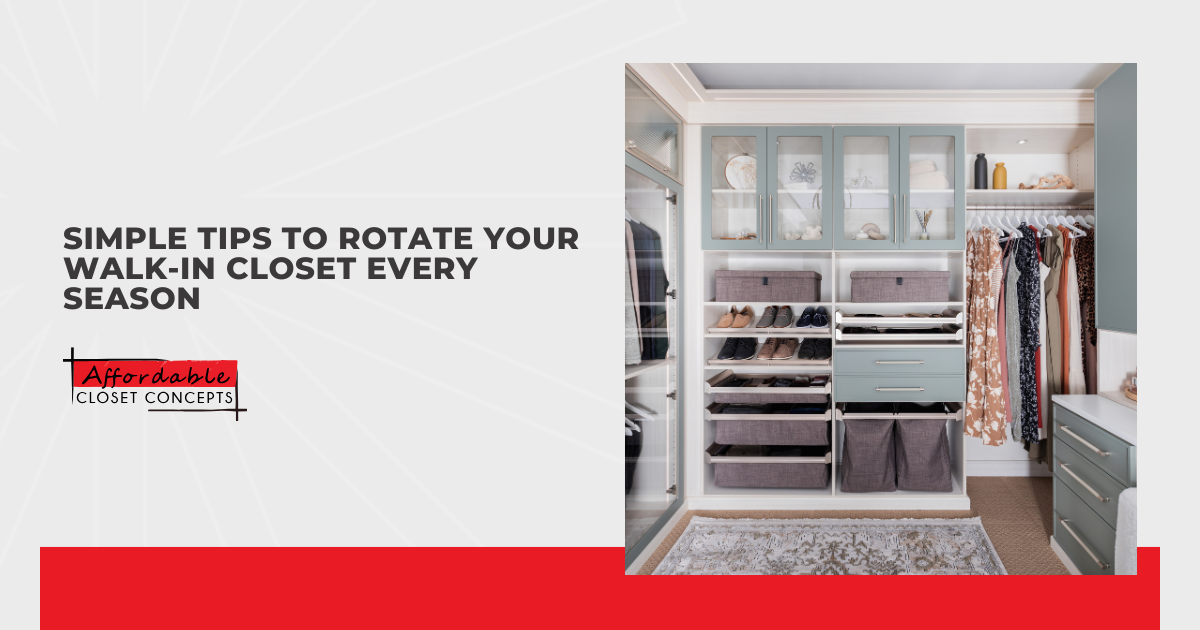
Seasonal changes can make even a well-organized walk-in closet feel chaotic, especially when sweaters, summer pieces, shoes, and accessories are all competing for the same space. When the right pieces are buried behind things you won't wear for months, getting dressed takes longer than it should. A good closet layout isn't about having more space, it's about using the space you already have more intentionally.
Rotating your walk-in with the seasons is one of the simplest ways to reclaim your space without a full overhaul. I like showing how small changes, like sorting by season, storing off-season pieces, and refreshing your shelves, can make your wardrobe much easier to manage. With the right closet system, each seasonal switch becomes practical, organized and entirely stress-free.
These eight simple moves will keep your walk-in closets working with you all year long, no matter what the weather brings:
- Sort clothes by current season
- Store off-season pieces properly
- Declutter items you skip
- Organize by color and type
- Refresh shelves and hanging space
- Rotate shoes and accessories seasonally
- Protect delicate fabrics with care
- Add labels for better flow
- Maintain the system each season
Keep reading, and I will guide you through the exact habits I rely on to keep walk-in closets organized all year.
Sort Clothes by Current Season
Start with the clothes you'll actually reach for in the coming months. Pull those pieces forward so they sit at eye level and within easy reach, then push the rest toward the back or into storage. When I set up walk-in closets for clients, I always keep the current season's wardrobe in the prime real estate because those are the items you touch every single day.
Grouping by season also gives you a quick snapshot of what you own. You'll spot the gaps, like realizing you have five sweaters but only one pair of warm pants, before the temperature drops. Seasonal sorting turns your closet into a working system instead of a pile you dig through each morning.
Give yourself a clear line between "now" and "later" so nothing competes for space. Warm-weather clothes shouldn't crowd your cold-weather layers, and vice versa. I've found that walk-in closets feel twice as big once you stop storing all four seasons in the same three feet of hanging space.
Store Off-Season Pieces Properly
Once you've pulled the current season forward, off-season clothes need a proper home. Fold heavy knits instead of hanging them, since hangers stretch the shoulders over time. Lightweight breathable bins protect fabric better than sealed plastic, which can trap moisture and leave a musty smell.
Here's how I recommend storing your off-season pieces:
- Clean Before You Store: Wash or dry-clean everything first, because stains and body oils attract moths and set deeper over months. Clean clothes come out of storage ready to wear.
- Use Breathable Containers: Fabric bins and cotton garment bags let air move while keeping dust out. Sealed plastic can trap humidity, and that leads to mildew on your favorite pieces.
- Label Each Bin: Mark bins by season or category so you're not opening five before finding the right one. Good labeling saves real time during every seasonal swap.
Store these bins on the higher shelves of your walk-in closets, since you won't need them daily. Keeping them off the floor protects against dust and accidental spills while freeing up your prime space for the clothes you're wearing right now.
Declutter Items You Skip
Seasonal rotation gives you the perfect moment to be honest about what you keep. If a shirt sat untouched all season, it probably won't earn its spot next year either. One of the costly habits I see with walk-ins is holding onto pieces out of guilt rather than genuine use.
Set up three simple piles as you sort: keep, donate, and repair. Anything with broken zippers or missing buttons goes in repair, and if you won't actually fix it, let it go. Be realistic about clothes that no longer fit, because a crowded closet makes the pieces you love harder to find.
Decluttering isn't about owning less for its own sake. It's about making room so your walk-in closets serve the wardrobe you truly wear. You'll be surprised how much lighter and more functional your space feels once the dead weight is gone.
Organize by Color and Type
Grouping clothes by category makes getting dressed faster and far less frustrating. Keep all your pants together, then shirts, and jackets, so you always know where to look. Within each group, arrange by color from light to dark for a clean, easy-to-scan layout.
Color coding does more than look pretty on a shelf. You'll instantly notice you own six white tees, which stops you from buying a seventh. I like how a color-sorted system helps you shop your own closet first, and it keeps your closet feeling calm instead of chaotic.
Consistency matters more than any single method here. Pick a system that fits how your brain works, whether that's by color, sleeve length, or how often you wear something. Once your walk-in closets follow a predictable pattern, putting laundry away becomes almost automatic.
Refresh Shelves and Hanging Space
Seasonal rotation is your chance to give the closet itself a little care. Empty the shelves, wipe down surfaces, and clear out the dust that gathers behind folded stacks. Fresh, clean shelves make even an older closet feel brand new again.
Reassess how your space is divided while everything's out. Maybe you need more hanging room for coats this winter, or extra shelf space for chunky sweaters. I always tell clients that walk-in closets should flex with their wardrobe, not force the same layout year-round.
Adjustable shelving and movable rods make these seasonal shifts painless. Raise a rod to fit long dresses, or add a shelf where you keep piling folded items on the floor. Small tweaks keep your custom closets working with your habits instead of against them.
Rotate Shoes and Accessories Seasonally
Shoes and accessories deserve the same seasonal treatment as your clothes. Move sandals to the back when boot weather arrives, and bring scarves and gloves front and center. Keeping current-season footwear at eye level saves you from crouching and digging every morning.
Try a few of these approaches to keep everything visible and reachable:
- Store Shoes in Clear Boxes: See-through containers protect leather from dust while letting you spot each pair fast. Stackable boxes also make the most of vertical space in tighter walk-in closets.
- Hang Accessories on Hooks: Belts, bags, and scarves stay wrinkle-free and easy to grab when they hang. Hooks turn otherwise wasted wall space into practical, tidy storage.
- Use Dividers for Small Items: Drawer dividers keep sunglasses, jewelry, and watches from tangling together. You'll find what you want in seconds instead of untangling a pile.
Give your off-season shoes a quick clean before tucking them away. Boots stuffed with tissue hold their shape, and a cedar block keeps everything smelling fresh. Little steps like these mean your walk-in closets always feel ready for whatever the season brings.
Protect Delicate Fabrics With Care
Delicate pieces need extra attention during any seasonal swap. Silk, cashmere, and fine wool react badly to rough handling, so treat them gently as you rotate. Padded hangers support the shoulders of blouses and dresses without leaving those awkward dents.
Moths and moisture are the biggest threats to your nicest fabrics. I've seen beautiful wool coats ruined because they went into storage dirty, so always clean before you pack anything delicate away. Cedar blocks and lavender sachets keep pests out while adding a pleasant scent to your walk-in closets.
Watch the environment inside the closet, too. Direct sunlight fades color over time, and damp air invites mildew, so aim for a cool, dry, shaded spot. With a bit of care, your finest garments stay in great shape season after season.
Add Labels for Better Flow
Labels bring order to everything you've just organized. Mark your bins, shelves, and drawers so the whole system stays intact long after your big sort. Clear labels also help everyone in the house put things back where they belong.
Simple labels prevent that slow drift back into clutter. When each item has a named home, you're far less likely to shove a sweater wherever it lands. I recommend labeling your walk-in closets even if you live alone, because it removes the guesswork and keeps your routine effortless.
Keep your labels readable and consistent for the best results. Use a label maker or neat handwriting, and stick to the same categories across every bin and shelf. Good labeling is a small effort that pays off every time you open your walk-in closets.
Maintain the System Each Season
All this work sticks best when you revisit it regularly. Treat each seasonal change as a quick reset rather than a full overhaul, and the job stays manageable. Fifteen minutes every few months beats a stressful all-day cleanout once a year.
Build a short routine you'll actually follow. Swap the current season forward, spot-check for clutter, and wipe down any dusty shelves as you go. I've found that clients who keep up this rhythm rarely feel overwhelmed by their walk-in closets again.
Consistency is what turns a one-time project into a lasting habit. Your wardrobe changes, your life changes, and your storage should keep pace with both. Maintain the system each season, and your walk-in closets will stay functional, tidy, and genuinely enjoyable to use.
Conclusion
Seasonal wardrobe changes don't have to feel like a chore. When your walk-in closet is organized around your everyday routine, getting dressed becomes effortless. You'll notice it in small ways, such as reaching for an item and finding it exactly where you expect it. That kind of ease isn't about a picture-perfect setup. It comes from a system you've built for yourself and actually stick to.